
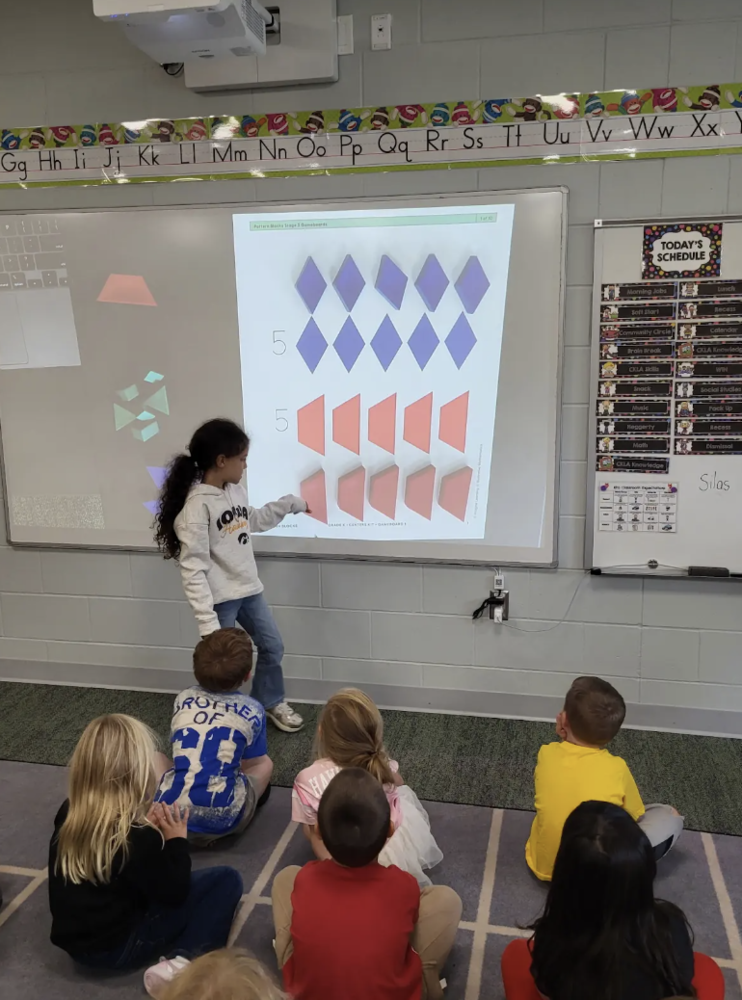
The work of becoming great mathematicians starts right away in kindergarten. Beginning the first week of school, Parkview kindergarten students have been learning foundational math skills, which they will utilize, and apply throughout the school year. They began by simply exploring a variety of math tools, such as connecting cubes, pattern blocks, two-color counters, and five frames. Students had time to make creations of their choice with these tools, and discussed which tools would be best for certain tasks, such as measuring, patterning, and counting.
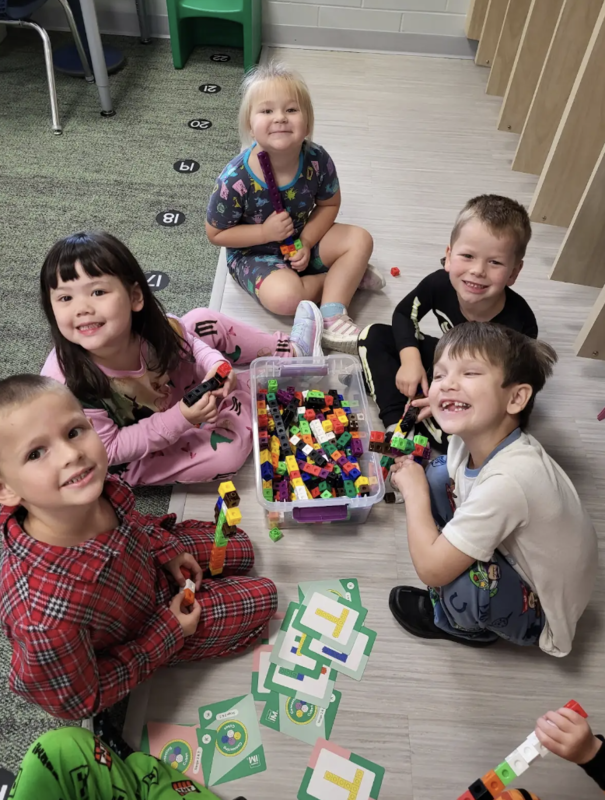
After having time to explore these math tools, students moved to the next stage of their learning, in which they had specific tasks to complete. For example, students were introduced to an activity called Get and Build, in which they chose a card displaying specific numbers of pattern blocks (ie, 5 squares, 3 triangles, 4 hexagons), and had to build something using the correct quantity of each block. This activity gives students the opportunity to practice critical number sense skills, such as numeral recognition, and 1:1 counting correspondence. Illustrative Mathematics, the curriculum that we use, utilizes many of the same tools, and/or activities throughout the school year; however, when activities are revisited, the task is adjusted so that it requires more advanced skills/thinking.
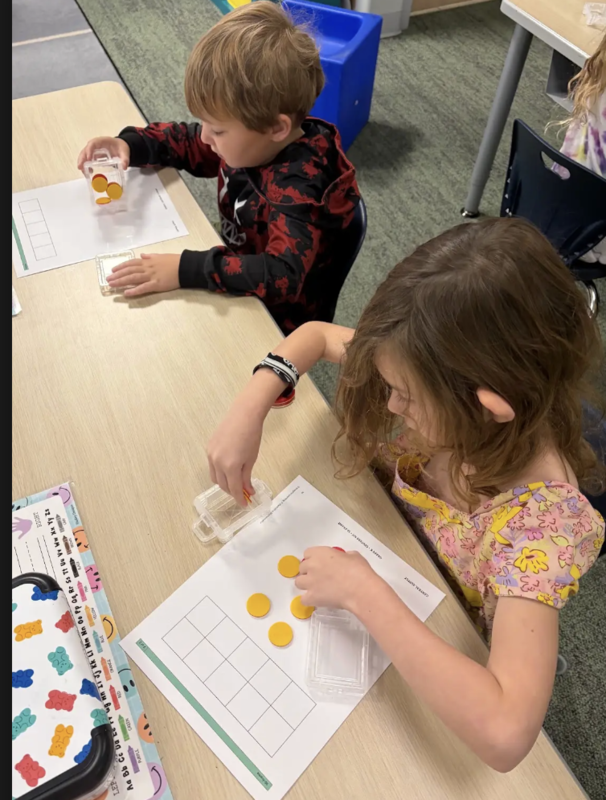
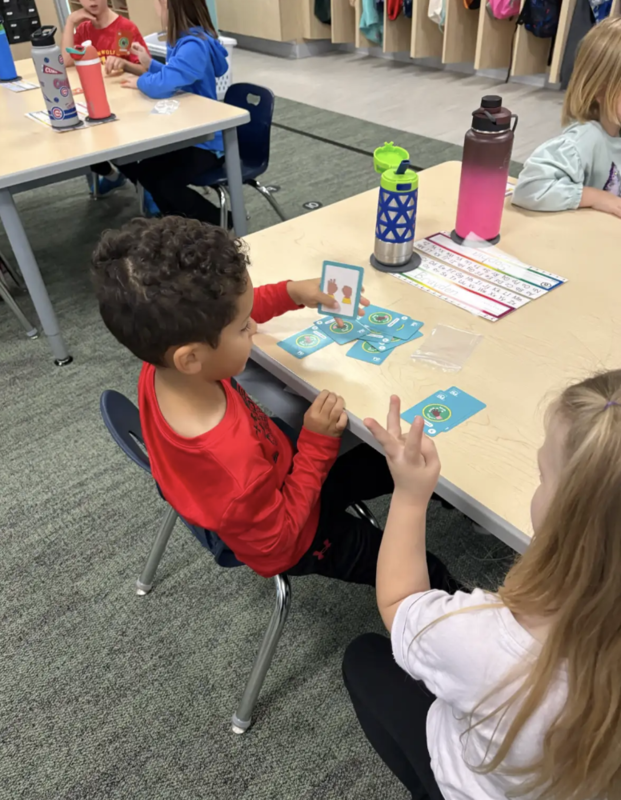
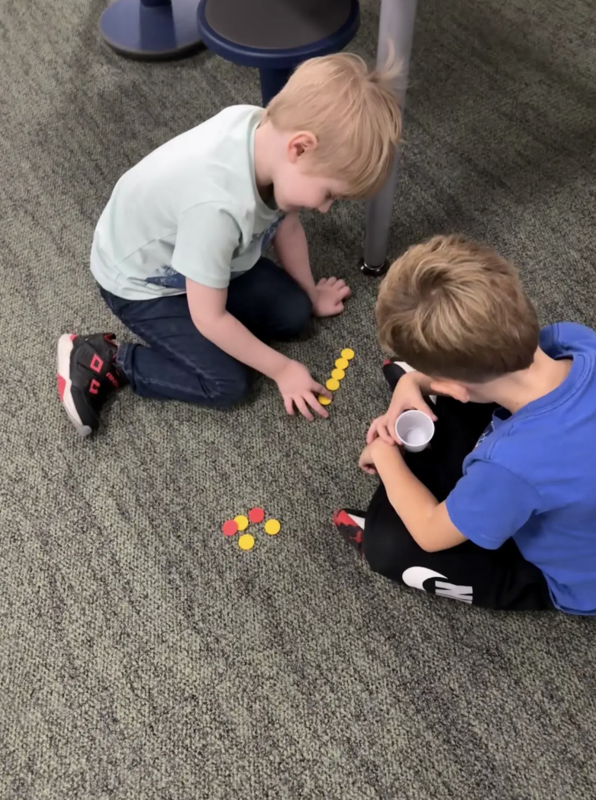
An additional number sense skill that kindergarten students have been working on is comparing numbers. Two activities that students have done to practice this are Show-and-Say, and Shake-and-Spill. When playing the first stage of Show-and-Say, students had to look at cards displaying various amounts of fingers, and had to verbally say the number that was being represented. In stage two of this game, students had to identify the number being represented, as well as numbers that were fewer, and more than the number being represented. Show-and-Say also allows students to work on subitizing, which is the ability to look at a group of objects and know how many there are without having to count each individual object. Similarly, students practiced comparing quantities when playing Shake-and-Spill. Students dropped ten counters, and had to count how many landed on the red side, how many landed on the yellow side, and determine which color had more/less than the other. It has been exciting to see students’ progress, and they are just getting started!