
The staff at Francis Marion Intermediate is committed to helping all students become successful readers. We know how crucial it is for schools and families to work together to support student learning. Just 15–20 minutes of reading each day can make a big difference! When children read at home, they get extra practice that supports what they are learning in school and helps them develop a lifelong love of reading.
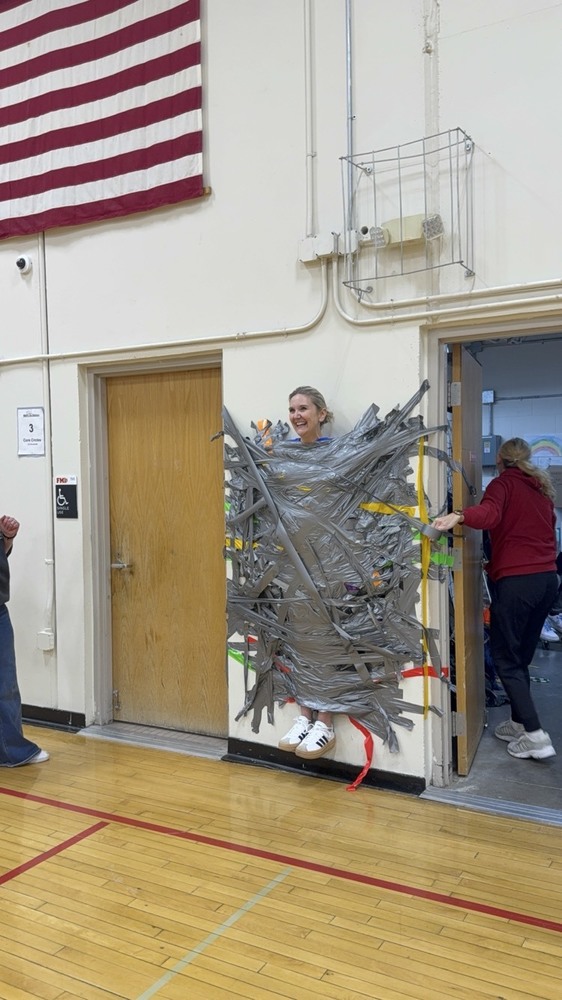
Last fall, FMI set a challenge for students and staff to read 500,000 minutes by the end of the school year. The reward was taping Mrs. Tolly to a wall in the gym during an all-school assembly. Students and staff alike were asked to complete weekly reading logs to track their minutes. By the end of January, we met that goal—and more!
It is important to note that by 3rd and 4th grade, students are moving from learning to read to reading to learn. This means reading is no longer just about sounding out words—it’s about understanding information, thinking deeply, and learning new ideas. Regular reading at home helps children build stronger comprehension skills, grow their vocabulary, and become more confident readers overall.
Teachers are often asked how parents and guardians can support their child’s reading at home. Below are a few simple and effective ideas:
- Set aside a regular time each day for reading—after dinner, before bed, or right after school. Consistency helps children see reading as an important and normal part of their routine.
- Encourage your child to read books they enjoy. Chapter books, graphic novels, nonfiction, magazines, and even recipes all count as reading!
- Turn on closed-captioning while watching television to help build word recognition and comprehension.
- Model reading by letting your child see you read books, magazines, or newspapers.
- Read with your child. You can read a page, then your child reads a page. This models fluent reading and helps struggling readers feel supported.
- Talk about what your child is reading by asking questions such as:
- What was your favorite part?
- Why do you think the character did that?
- What do you think will happen next?
- Celebrate your child’s effort and progress. Comments like “I love how you didn’t give up on that part” help build a positive reading mindset.
When families and schools work together, the impact on student reading growth is powerful. We are excited to see the continued growth of our students as the year progresses and to see just how many minutes FMI will read by the end of the school year!